
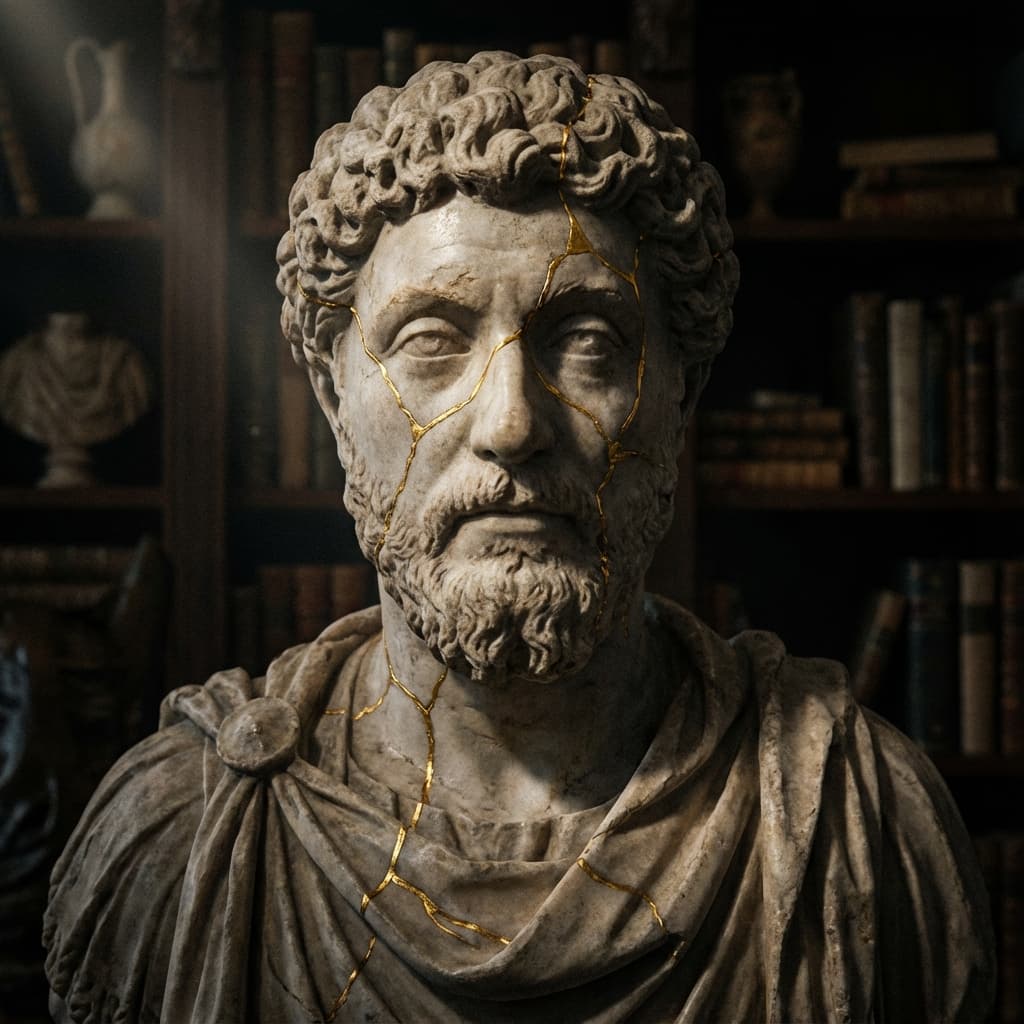
Imagine a philosophy created by a slave (Epictetus) and perfected by an Emperor (Marcus Aurelius). A philosophy tested in the extremes of human existence—absolute power and absolute powerlessness. That philosophy is Stoicism. It was built for hard times. And make no mistake, we are living in hard times—not physically, perhaps, but psychically. We are bombarded by information, addicted to outrage, and plagued by anxiety. Stoicism is the antidote.
The Dichotomy of Control
If you take nothing else from this article, take this: "Some things are up to us, and some things are not up to us." This is the foundation of Stoic logic. The majority of human suffering comes from trying to control things we cannot (the past, other people, the outcome) and neglecting what we can (our judgment, our actions, our character).
The modern man wastes immense energy stressing over politics, the economy, what his boss thinks, or what someone said on Twitter. This is madness. You cannot control these things. You can only control your response to them. When you internalize this, you become invincible. You stop wishing for reality to be different and start dealing with reality as it is.
Memento Mori: Remember Death
In our culture, we hide death. We sterilize it, put it in hospitals, and pretend it won't happen. The Stoics kept it close. "You could leave life right now. Let that determine what you do and say and think." - Marcus Aurelius.
This is not morbid; it is clarifying. When you realize that your time is finite and uncertain, the trivial bullshit falls away. Are you really going to spend your limited time arguing with a stranger on the internet? Are you really going to hold that grudge? Are you really going to delay your dreams for "someday"? Memento Mori creates urgency. It demands that you live significantly now.
Amor Fati: Love Your Fate
Friedrich Nietzsche, though not a Stoic, perfectly captured this Stoic idea. Don't just bear what happens to you; embrace it. Love it. "Not merely to bear what is necessary, still less conceal it... but love it."
Did you get fired? Good. It's an opportunity to find a better career or start a business. Did she leave you? Good. It's an opportunity to rebuild yourself and find someone better aligned. Did you get injured? Good. It's a time to train your mind and patience. This is the ultimate reframing tool. You become antifragile. The chaos doesn't break you; it makes you stronger. The obstacle becomes the way.
Sympatheia: We Are Connected
Stoicism is often mistaken for hyper-individualism. But the Stoics were cosmopolitans—citizens of the world. They believed in Sympatheia, the mutual interdependence of all things. "What is not good for the beehive, cannot be good for the bee."
A high-value man serves his tribe. He understands that his strength is not just for himself, but for the protection and upliftment of those around him. Selfishness is weakness. Service is strength. Use your discipline and your wealth to build up your community. That is the highest form of virtue.
Practical Exercises for the Modern Stoic
- The Morning View from Above: Before you start your day, zoom out. Imagine yourself from the sky. See your city, the nation, the earth. Realize how small your problems are in the cosmic scale. This brings perspective.
- Premeditatio Malorum (Negative Visualization): Imagine what could go wrong. The car breaks down, the deal falls through. If it happens, you are prepared. If it doesn't, you are grateful.
- Voluntary Discomfort: Take cold showers. Fast for 24 hours. Sleep on the floor once a month. Train yourself to be comfortable with being uncomfortable. Then, when life forces discomfort on you, you wont panic.
Conclusion
Stoicism is not a religion. It is an operating system for the mind. It doesn't require faith; it requires practice. It is a warrior's philosophy. It asks you to stand up, do your duty, and face the world with courage and equanimity. It asks you to be a man.